Registration is not needed, participation list is circulated in the audience.
If you are a student and later wish to get a certificate of attendance from the Frontier of Science seminars (BKEM1020; UTU), print out the seminar diary and after the seminar ask the BioCity coordinator to sign it https://seafile.utu.fi/d/44a70f80ac1e46a9ad0a/
Please note that any audio or video recording of the seminars is strictly forbidden.
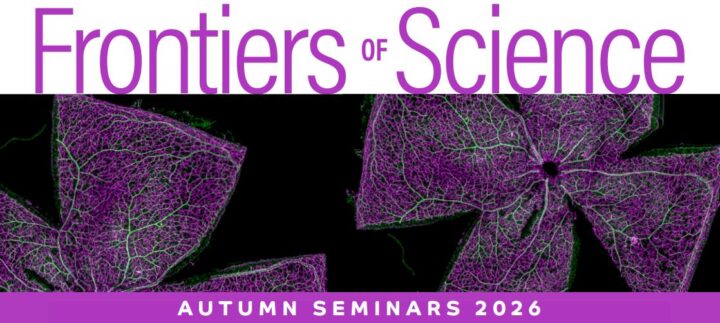
Autumn 2026 image credits to Samuel Svärd: Whole mount immunofluorescent staining of the mouse retina. Image acquired on 3i CSU-W1 Spinning disk with 10x objective.
8 October 2026 Prof. Markus Linder, Aalto University, Finland The biological future of materials science Host: Yagut Allahverdiyeva (allahve@utu.fi)
Prof. Markus Linder is a pioneer in the field of biosynthetic and biomolecular materials, drawing inspiration from nature’s highly sophisticated material systems, such as silk, extracellular matrices, and marine adhesives. His research combines protein engineering, biotechnology, and materials science to create sustainable, high-performance materials produced by microbial systems. In this seminar, he will discuss how biologically inspired materials and even living materials may transform the future of manufacturing and sustainability.
22 October 2026 Prof. William Stafford Noble, University of Washington, USA Making sense of genomic and proteomic data with machine learning Host: Balazs Balint (balazs.balint@utu.fi)
Prof. William Stafford Noble is one of the leading pioneers in applying machine learning and statistical methods to genomics, proteomics, and computational biology. His research has contributed widely used computational tools for analyzing DNA sequences, chromatin organization, and mass spectrometry-based proteomics data. His seminar will highlight how advanced machine learning approaches can reveal biological insights from increasingly complex genomic and proteomic datasets.
5 November 2026 Prof. Angela Falciatore, CNRS Sorbonne Université, France Exploring marine diatom biodiversity through photobiology Host: Yagut Allahverdiyeva (allahve@utu.fi)
Prof. Angela Falciatore is an internationally recognized expert in the biology, photobiology, and evolution of marine diatoms, a group of microalgae responsible for a substantial fraction of global carbon fixation. Her work has revealed how these organisms perceive and respond to environmental light signals and adapt to changing marine environments. In her seminar, she will explore how photobiological mechanisms help shape diatom diversity and ecological success in the oceans. [pubmed.ncb…lm.nih.gov], [scholar.google.com]
12 November 2026 Prof. Miguel Soares, Gulbenkian Institute for Molecular Medicine, Portugal Metabolic adaptation as a defence strategy against infection Host: Antonio Sousa (aggode@utu.fi)
Prof. Miguel Soares is a leading immunologist known for establishing the concept of disease tolerance as a fundamental defense strategy against infection. His research investigates how metabolic adaptations and stress-response pathways help organisms maintain tissue function and survive infectious challenges without directly targeting pathogens. During this seminar, he will discuss how metabolic reprogramming contributes to host protection and resilience during infection. [gimm.pt], [scholar.google.com]
19 November 2026 Prof. Gwendalyn Randolph, WashU Medicine, USA The 3 L’s converge: Lymphoid tissue, lymphatics, and lipoproteins Host: Sirpa Jalkanen (sirjal@utu.fi)
Prof. Gwendalyn Randolph is a prominent immunologist whose work has transformed our understanding of immune-cell migration, lymphatic biology, and inflammatory disease. Her research focuses on how cells and molecules move through tissues and lymphatic vessels, linking immune function with vascular biology and lipid transport. In this seminar, she will discuss the emerging connections between lymphoid tissues, lymphatic networks, and lipoprotein trafficking in health and disease.
26 November 2026 Prof. Maria Sibilia, Medical University of Vienna The tumor microenvironment and different cell types in malignant progression Host: Johanna Ivaska (joivaska@utu.fi)
Prof. Maria Sibilia is a leading cancer biologist whose work has revealed how interactions between cancer cells, immune cells, and stromal cells shape tumor development. Her research has been particularly influential in defining the role of EGFR signaling within the tumor microenvironment and its impact on cancer progression and therapeutic responses. In her seminar, she will discuss how distinct cellular components of tumors cooperate to drive malignant growth and how these interactions may be exploited therapeutically.